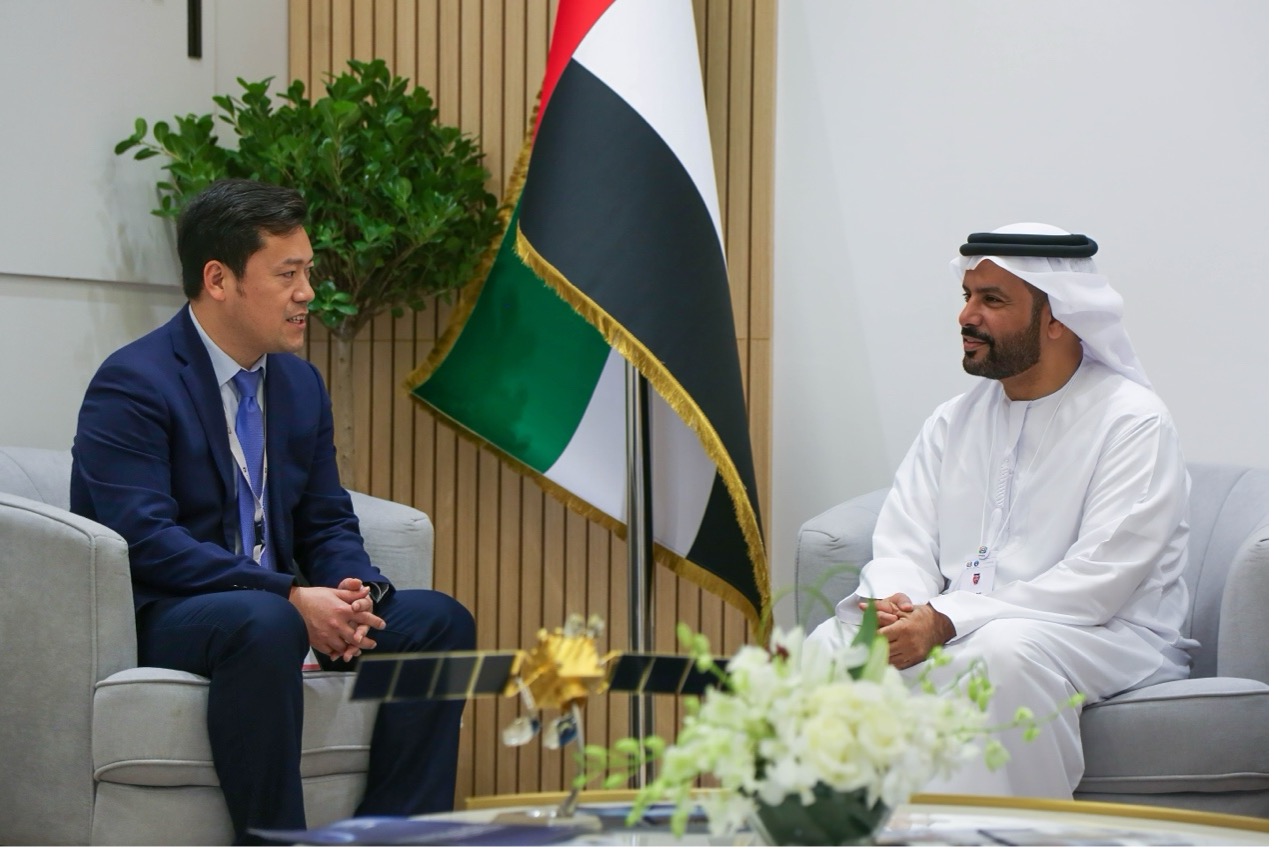

Liu Wei, Founder and Chairman of Cangyu Space, said this satellite stands at the helm of the company's celestial endeavor, and is set to join the stars next September.
"GEO satellite is very special and this satellite is very powerful and capable. One GEO satellite can cover more than 40 percent of [the Earth's] surface, and three GEO satellites can achieve 100 percent coverage," Liu said.
This GEO satellite is the first of Cangyu's planned constellation of 13 satellites by 2030, with four high-orbit GEO satellites, six medium-orbit MEO satellites and three IGSO satellites. Liu explained that such an ambitious system is designed to meet the surging demand for real-time satellite remote sensing data services from global users.
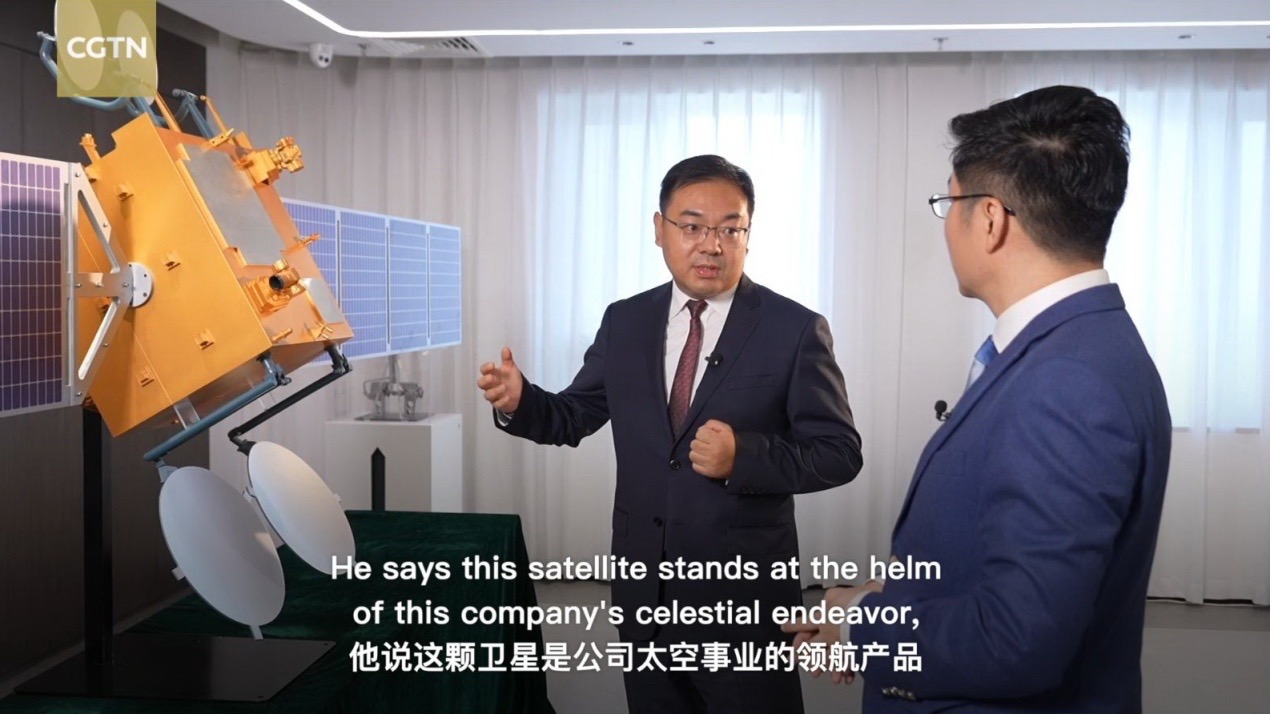
"By the year 2030, China plans to launch more than 3000 low-orbit satellites, and these satellites will need space-based measurements and communication services. At the same time, the rockets that launch these satellites will need us to support real-time transmission services. This system is expected to create a market of hundreds of billions of RMB," said Liu.
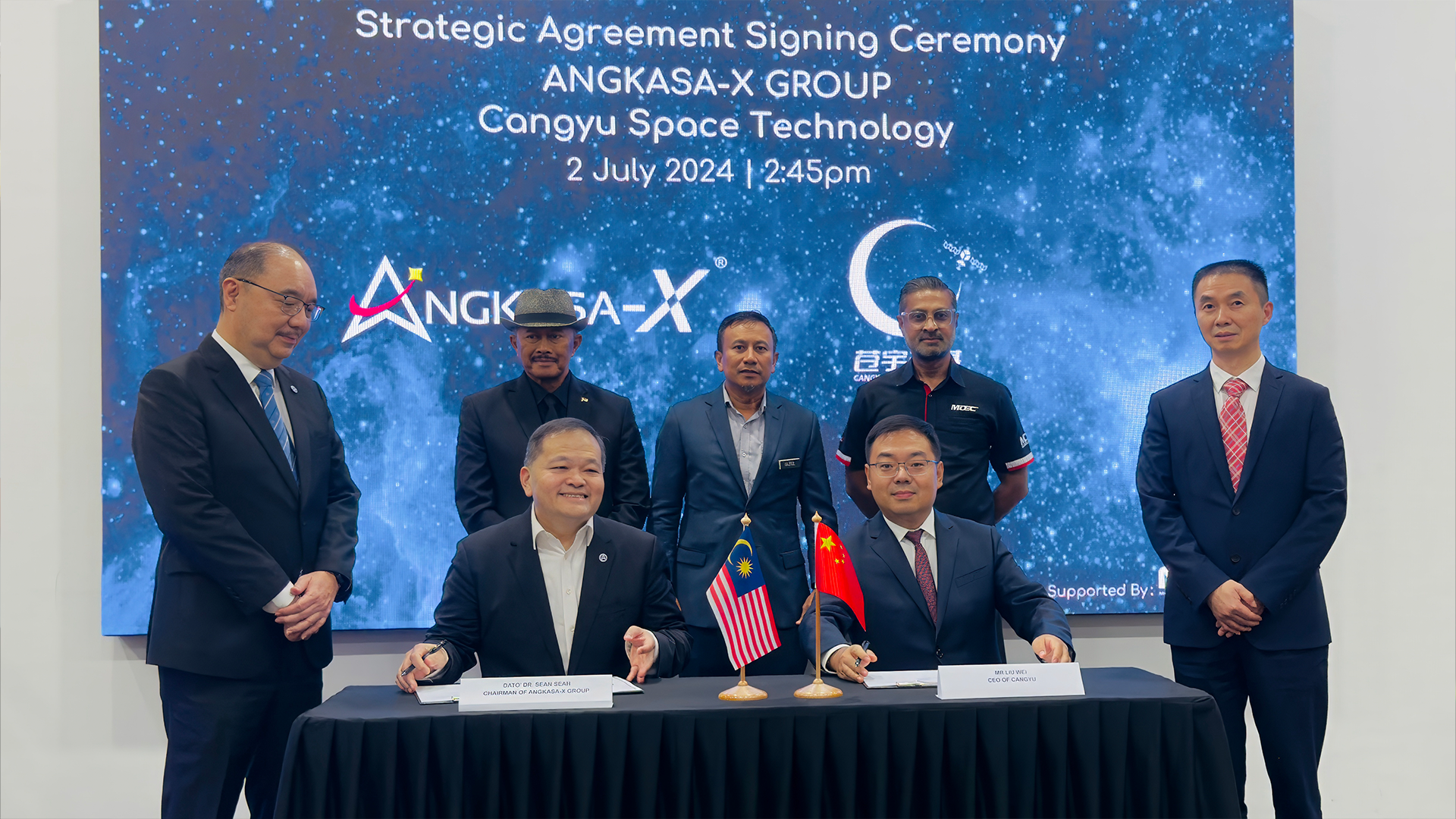
"For instance, Indonesia mining companies, they need data to make sure nobody steals their mines, particularly gold mines and nickel mines. So, we are using satellite data to provide intelligence. So, how is Malaysia positioning? We are working with Cangyu. We are working with global satellite companies to fit into the applications for different countries and different industries and different usages and purposes," said Sean Seah Kok Wah, Founder, Executive Chairman and CEO of Angkasa-X.